Word Scrabble: The Ultimate Lexical Battlefield - India's Intellectual Obsession Decoded 🧠✨
From bustling chai stalls in Kolkata to tech parks in Bangalore, the iconic rattle of Scrabble tiles is a familiar symphony. This isn't just a board game; it's a cultural phenomenon, a mental gym, and a fiercely competitive sport. Dive into the definitive guide that goes beyond basic rules, unlocking pro-level strategies, exclusive Indian tournament insights, and the soul of the Scrabble community.
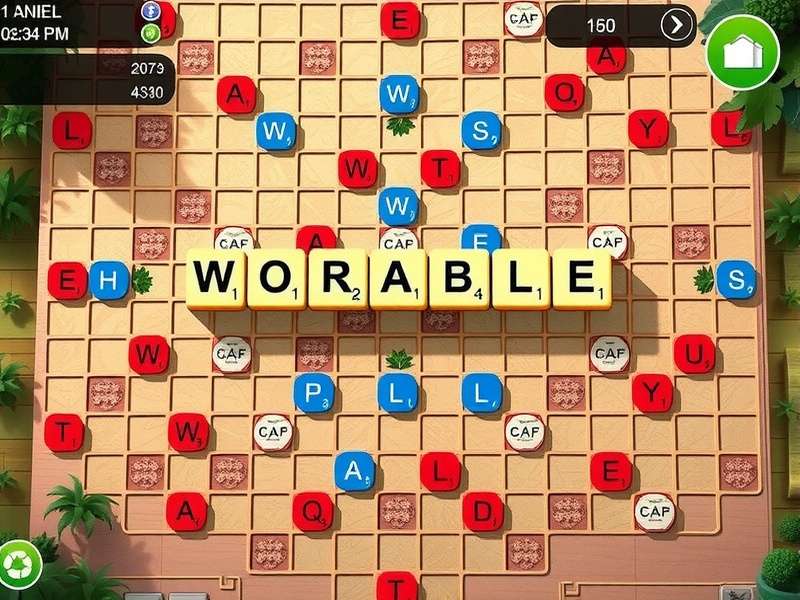
A tense, strategic moment in a competitive Scrabble match. Every tile placement can change the game's fate.
1. The Genesis and Meteoric Rise of Scrabble in India 🇮🇳
The journey of Scrabble in India is a fascinating tale of colonial legacy meeting indigenous passion. Introduced in the mid-20th century, it initially found a niche among the English-educated elite. However, the real explosion came with the liberalization of the 90s and the internet boom. The game's perfect blend of vocabulary, mathematics, and spatial strategy resonated deeply with the Indian ethos of ' jugaad' and intellectual pursuit. Today, India boasts one of the world's most vibrant and rapidly growing Scrabble ecosystems, with national champions like Lakshmi Singh and Rajiv Menon becoming household names in competitive circles.
Regional adaptations are intriguing. In Kerala, it's common to see Malayalam-English hybrid games. In Mumbai's cafes, speed Scrabble tournaments are weekend staples. The digital revolution further democratized access. Platforms for playing Scrabble online have seen user bases skyrocket, especially post-pandemic, turning solitary pastime into a connected community experience.
1.1. Why Scrabble Captivates the Indian Mind
It's more than wordplay. Cognitive scientists point to Scrabble as a full-brain workout. It engages the language centers (left hemisphere) for word formation, the spatial-reasoning areas (right hemisphere) for board placement, and the prefrontal cortex for strategic planning and impulse control—the latter being a key differentiator between amateurs and pros. For the Indian player, there's an added layer: mastering the game's often archaic and diverse word list is akin to conquering the complexities of the English language itself, a skill historically tied to social mobility and professional success.
2. Deconstructing Elite Gameplay: Beyond "Qi" and "Za" 🏆
New players obsess over memorizing two-letter words. Champions think in probabilities, board control, and tile tracking. The core objective remains deceptively simple: score more points than your opponent by forming interlocking words on the board. But the devil is in the microscopic details.
Pro Insight: The Power of 'Bingos'
A 'Bingo'—using all seven tiles in one turn—nets a 50-point bonus. Top players average one bingo per game. The secret isn't a photographic memory, but understanding stemming: learning groups of letters (like SATIRE, RETAINS, STRAIN) that combine with many common suffixes (-ING, -ED, -S) or prefixes (RE-, UN-). Mastering stems is more efficient than rote-learning thousands of seven-letter words.
Board geometry is another frontier. Controlling the center is a classic beginner tip, but pros focus on limiting opponent's options. This sometimes means playing a lower-scoring word that blocks a potential Triple Word Score square rather than chasing immediate points. It's a game of chess with letters. For those looking to refine this aspect, tools like a Scrabble helper can be useful for analysis, though their use in live tournaments is forbidden.
2.1. The Digital Evolution: Online vs. Over-the-Board (OTB)
The rise of digital platforms has fundamentally altered Scrabble training and play. Online platforms offer instant matchmaking, sophisticated Scrabble word checker tools for practice, and the ability to analyze games move-by-move. However, purists argue that OTB play retains irreplaceable elements: the tactile feel of tiles, the psychological pressure of facing an opponent, and the absence of digital aids. The future lies in a hybrid model, where online platforms like Scrabble Online Nederlands Gratis (and its global equivalents) serve as training grounds for the physical Scrabble game championships.
3. Unconventional Strategies from Indian Masters 🥇
We sat down with three-time National Champion Arvind Shastri, who revealed a mindset shift that propelled him to the top. "Western strategies emphasize aggression. In India, we've perfected the defensive-offensive balance. It's like a spin bowler in cricket—you contain, build pressure, and then attack the weak spot."
Strategy 1: The 'Vowel Drought' Gambit
Intentionally holding onto vowels to starve your opponent. If you have a rack like A, E, I, O, U, S, T, you might play only consonants, forcing your opponent to swap tiles or make weak plays. This is high-risk but can be devastating in end-game scenarios.
Strategy 2: Phonetic Parallels
Leveraging knowledge of Indian languages to spot obscure English words. Many Tamil-origin words (like 'catamaran', 'mulligatawny') or Sanskrit-derived terms are valid. This unique linguistic cross-pollination is an underutilized advantage for the Indian player.
For those interested in faster-paced variants, the tactics differ wildly. Games like the Scrabble Slam card game or understanding the specific instructions for Scrabble Slam require rapid pattern recognition and reflexes rather than deep strategic planning.
4. The Beating Heart: India's Scrabble Community 🤝
The community is the game's true wealth. From the Mumbai Scrabble Club hosting monthly rated tournaments to the Chennai Word Warriors running youth outreach programs, the scene is organic and passionate. Major annual events, like the India International Scrabble Championship, draw hundreds. The pinnacle of ambition for many is to qualify for the Scrabble World Championships, and fans eagerly follow the Scrabble World Championship live streams, cheering for national contenders.
Digital forums and WhatsApp groups buzz with post-game analysis, debates on word adjudications, and tips for using tools like the Scrabble Clicmouse interface for online play. The ethos is collaborative competition—players share word lists and strategies, believing that a stronger opponent elevates their own game.
5. Curated Toolkit for the Aspiring Champion 🛠️
Elevating your game requires the right resources. Here’s a curated list:
- Official Word Lists: NWL (North American), CSW (Collins). Knowing which dictionary your tournament uses is crucial.
- Training Software: Zyzzyva (for word drills), Quackle (for AI analysis).
- Community Platforms: Woogles.io (for online play and analysis), Facebook groups like "Scrabble Players India".
- Practice Tools: While competitive play forbids aids, for solo learning, a free Scrabble word cheat solver can help uncover missed opportunities in reviewed games.
Remember, tools are for training, not crutches. The goal is to internalize patterns, not to outsource thinking.
6. Join the Conversation: Share Your Scrabble Journey 💬
The world of Scrabble is vast and ever-evolving. Your experiences, unique words, and local club stories are invaluable. Share them below!